Tuesday, September 2, 2014

Bak Kelalan Birdwatching III 30 Aug - 1 Sep 2014


In Flight to Bak Kelalan


Lake Merimbun Brunei


MNS team happy to arrive in Bak Kelaln airport


Welcoming party by Cikgu Sang Sigar


Even at the least possible place there are also friends around


Improved Sang Homestay


 A welcome sight of padi Field of Bak Kelalan


Getting Ready to make presentation to SKK Ba' Kelalan


Cikgu sang introducing MNS Miri Branch


Peter Pillai giving Presentation of Tracking and Nature around the track.


In the trail with SKK bak kelalan student


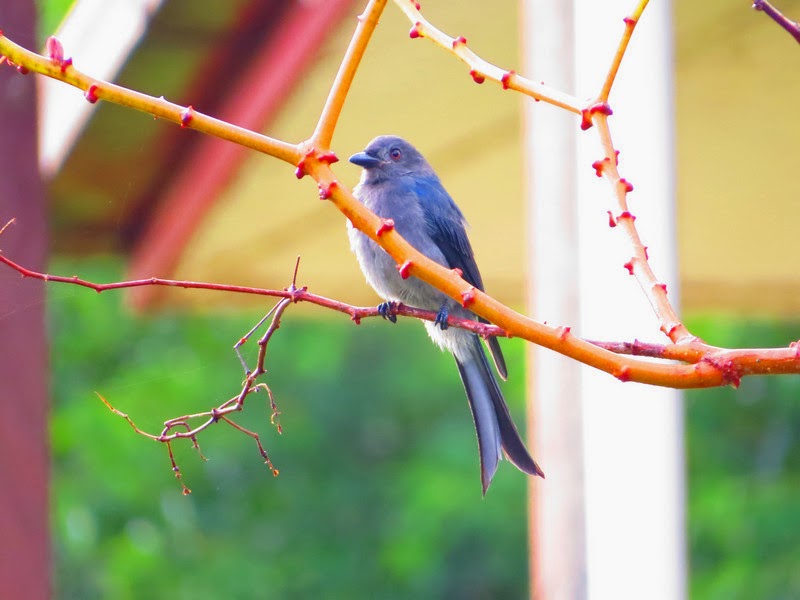
Ashy Drongo


Black and Yellow Broadbill


Cikgu Sang with his pencil Drawing masterpiece.


Cikgu Sang drawing of Clouded lepord from Bak kelalan

Yellow vented Bulbul
Ashy Drongo


White Brested Wood Swallow


Oriental Magpie Robin


Himilayan Cockoo


Barn Swallow


Violet Flowers


Daisy


A shaking bridge


Pied Fantail


A dead cobra


House sparrow


Gold whiskered barbet


Birdwatching at Dulit range


 Unidentified cuckoo


A very spacious Homestay


White brested waterhen


Spoted Dove


Yellow bitten


Mushroom


Touch me not flower


Flower


Bunga pasir


Buduk Nur Church


Violet buter cup


A young Berawan lady


 MNS Miri Branch birdwatchers 2014


We will be back to Bak Kelalan

Monday, August 25, 2014

A Walk and Birdwatching at Bawai Island 24 Aug 2014

Bawai Island as we called it was formed by great Baram River by dumping tons of sediment in front of the river mouth. It circumference is about 3 km and 2 km from the river mouth beaches. The island is connected to the main land by a strip of sandbar. This sandbar is exposed for 3 hours twice a year for a week. At that the time this island is accessible by walking.
Bawai island Situated 2 km from the river mouth. The island is occupied by casuarinas trees and mangroves trees and small shrubs. It is the temporary home of migrating birds as the huge sandy mudflats provides plenty of food for their summer holiday here. Crocodiles have been observed basking on the beach of this island. A family of large tailed nightjar was seen during our camping trip to island. People reported plenty of rats but none seen during our two camping sessions. Erwin Adams discovered the week end of 22nd Aug 2014 was the perfect time to walk to the island. A trip was organized to walk from 3 pm when the tide was falling rapidly and to be back by 6 pm when the tide rose quickly. This is the window during which we are planning to reach the island. Two earlier attempts by MNS in 2010 and 2012 failed to reach the island on foot. Our two camping trips were by boat.
Tide of 24th. Aug 2014 Baram River. We gathered at Shell office Lutong at 2:30pm and left at 2:45 by car pooling to the area where we disembarked from the road to the beach. When we move along the beach at 2:50 I saw along the beach the water level was still high close to the vegetation area. I presumed we cannot go the island. However Erwin told me that it the tide would fall fast as the graph I sent him illustrated. We reached the area where we parked our car close to the beach. Then we used a makeshift wooden bridge to cross a muddy lagoon. We carefully scaled a carbonate rock from Niah quarry retaining wall. The rock displayed many larger fossils. We had to drop off the front of the retaining wall to the beach and crossed a bush area. As we entered the beach we saw the beach is lined with peat bog. It consisted of black peat woody and leaf material that has been carried out to sea by Baram River. This peat bog has been clearly identified and describe by Anderson (1961, 1964, 1976, 1983) and Anderson and Muller (1975). The peat leaks out to the environment due to monsoon changes that excavate the beaches at Baram River mouth. We walked along the peat bog and we sometimes saw large pieces of resin too.
Peat bog: The finer materials are leaves and larger were branches.
We have to cross a knee deep delta channel. The water subsided rapidly and we managed to cross a small delta channel. From that we saw a huge mud flat – so extensive that we that we cannot not see the water’s edge. We saw Bawai Island with standing casuarinas trees. Behind it there is an oil platform called Baram B.
These locals are taking advantage of the low tide and casting their drift net for small fish.
Trekkers stopping for a while enjoying the birdwatching. We stopped for a while counting the water birds that came very early this year. I counted more than 70 little terns of which some might be common terns. There we also another group of terns, maybe 100 individuals, coming from Bawai island flying high toward the sea to the South West. There are Kentish plovers and Shanks on the mud. We could not identify them due to them being silhouettes in the sun.
Some of the terns
Mr Phui a diehard bird photographer getting closer to the terns to get a better photograph. MNS have been aggressively counting water birds in the area. We have camped on the island twice and also the beach that we crossed now, to intercept water birds that flew across south from the north. Other birds seen previously were the long legged stint, Curlew, Caspian terns, the turnstones and frigate birds.
Many terns flying around the fisherman waiting for small leftovers. I went another one a half kilometer and realised that Steve was sitting on a log a kilometers behind me. The rest of the team was already another half kilometer ahead of me. I took photograph of some of the large tree trunks I believe to be the larger parts of the peat bog.
The tree trunk I believe to be the large part of the peat bog.
Here is another one of the larger part of the peat bog.
Some scary looking large peat bog material.
Bawai Island looks close but is far from reach - I zoomed in with bridge camera 1000mm. Then I decided to turn back and joined Steve in case he need some help. Sure enough he was dehydrated because the water was with Susan up in front. I gave him my bottle of water. Thus I stayed with him watching other waders like the red stint, Malaysian Plovers, Mongolian plover which is now called Kentish plover. Very far to the South East was an intermediate egret.
The trekker team moved on as me and Steve just sat and watched the waders. I scan with my binocular the rest of the team disappeared at the East side of Bawai Island behind the casuarinas trees. Another half hour I saw their silhouette appearing on the West side of the island, behind them is Baram B platform.
The trekkers appeared in the East side of the island. Seen with 2400mm cannon bridge camera. As we saw them approaching we started to move back too. In just minutes the group reaches us. We choose to cross to the road using a new water way.. Previously this area cannot be accessed, because there was a mud lagoon where the waders were feeding. , The mud lagoon has moved to the south now. As we walked back we saw many flat-fish resting marks. A dead hermit-crab was seen on the sand which exposed its soft part probably bitten by other crabs. As we walked back we saw many flat-fish resting marks and a dead hermit-crab that grabed a smaller shell which exposed his soft part and dead bitted by other crabs.
This indentation is more than a meter diameter probably of a large ray.
A dead hermit-crab with a shell of garden snail removed. We reach our car at six o’clock in the evening. The GPS that Dave brought along the trek showed 5.5 miles of track, with an average speed of 3.5 mile per hour and took 2.5 hours to complete. The weather was fine with a cloud cover most of the time. Erwin offer to have a break at PBC but I was rushing to a family dinner at Niah thus we left the area about 6:15 pm. Thank you. Written by Musa Musbah, Chairman MNS Miri Branch. Erwin Adam (the organizer) and friends. Dave Paton, Steve Dexter and Susan, Joyce, Khuzaimi and friends.

Monday, August 19, 2013

Arrival of familiar migrants from the north

Though the East Atlantic and East Asian-Australasian Flyway are at least half a continent apart at their furthest separation, the two flyways share a fair number of similar migrant species. Once in a while there'd be vagrants that would cause some excitement on either side of the flyways. For example a Little Ringed Plover in Jaeren vis a vis a Common Ringed Plover in Kuala Baram.

Birders in the East Asian-Australasian Flyway ie, Sarawak may have a chance to spot these migrants in their magnificent breeding plumage early in the season before they moult into non-breeding colors. Early enough in the Autumn migration season several species sport "colorful" plumage when they left their breeding ground in the north during Aug/Sep and on arrival in Borneo.

Red Knot in breeding plumage from Langnes, Tromso (May 2013) when it arrived at it's staging area before continuing to Greenland, it's breeding site. Red Knot on the East Asian flyway has been recorded at Kuala Baram Lagoon as late as June by Miri birders. Great Knots have also been recorded along Sarawak, Brunei and Sabah coasts.

Juvenile Red Knot (Reve, Jaeren, Norway Aug 2013).

Common Ringed Plover (Tungenes Fyr, Norway Aug 2013) though very common and breed on the coasts in Norway have so far been reliably recorded in Lok Kawi, Sabah almost every year with 1-2 individuals (rare). This species have not been recorded in Miri, more common are the Little Ringed Plover which has been recorded in small numbers in Kuala Baram Lagoon and old Sg Miri delta (now developed).

Sanderling (breeding plumage, Tungenes Fyr, Norway Aug 2013) are common on the coasts in Sarawak though in small numbers. These whiter than white guys are always sighted frantically feeding at the surf. They can be seen in Kuala Baram, Luak Bay, Bekenu, Baraya and other sandy beaches.

Ruddy Turnstone (breeding and non breeding plumage, Tungenes Fyr, Norway Aug 2013) are regularly recorded in small numbers in Kuala Baram. Though they are more common on the rocky coral beaches in Sabah islands and coast. Pulau Tiga in Sabah is an ideal place for turnstones.

Ruff (non-breeding plumage, Reve, Jaeren, Norway Aug 2013) has been recorded in Kuala Baram on several occasions during autumn migration. In late April and early May, Ruff in breeding plumage normally arrived their breeding grounds in the north ready to lek.

Ruff in breeding plumage (Tisnes, Tromso, Norway May 2013).

Bar-tailed Godwit (Reve, Jaeren, Norway Aug 2013). This has been sighted in Kuala Baram though in small numbers, greater numbers are recorded in the south near Kuching wetlands.

Little Stint (Reve, Jaeren, Aug 2013), so far only 1-2 unconfirmed sightings of this species has been recorded in Kuala Baram lagoon. 

Eurasian Curlew (Obrestad, Jaeren, Norway, June 2013). Every year at least one sighting of the Far Eastern Curlew, which is the biggest of the curlew species with the longest bill, is made in Kuala Baram. More common are the smaller sized Whimbrel. One sighting of several Far Eastern Curlews were made in Pulau Tiga by members of MNS Miri birders during a fieldtrip back in 2008.

Common Sandpiper (Sorbotn, Tromso, Norway May 2013). Probably the most common in our region, this species can be seen almost every place where there's water ... in the fields, on the beach, in drains in residential areas. One can almost hear their call to each other in the morning and it's unmistakable.

Words and images by Nazeri Abghani/Norway, Aug 2013
For more wader pictures from Norway and Miri  http://www.flickr.com/photos/nabghani/collections/72157635001867927/

Saturday, August 3, 2013

Hornbills and the Weather

We must learn from the hornbill about our weather especially Jimmy the Piasau Oriental Pied Hornbill. Of all the commotion who built the nest and who break the nest. And finally we manage to put things together. In this ninth cycle of Jimmy and Faridah Nesting we have monitor the bird without disturbing them. There is a 12 hours video recording daily been setup at the area. The bird started to make the nest around 4 May 2013 and Closed it at 12 May 2013. It was found out that the Nest material was dissolved by heavy rain that came just coming in from the dry period. This is similar noted at the last season where the nest was assumed broken by a poacher during a heavy rain thunderstorm night which is similar to the night of 2 August 2013. Thus breaking of the nest by (the birds) either Faridah or Jimmy is not true. It in their natural instinct with weather pattern the know when to nest. A tide height table difference of Miri 2013 is being compare with the nesting session 2013 correlated with a dry season where the differences are at the maximum. Similar to the idea and theories who make who seals the nest opening of the nest. It was thought that Jimmy is making the nest. No. Jimmy only support in the making the nest by bringing materials like clay balls and wood chips. It was Faridah who munch these materials and padded it on the wall until the hole is small that she can no longer goes out. The making of the nest started on the 4 may and Faridah can no longer comes out on the 12 May. It took them around 9 days closing the nest opening. From 4 to 13 May Faridah came out of the nest ever every evening joining Jimmy. A few caressing was noted during this period, but no love making was recorded. All the while Faridah making the nest Jimmy will bring in foods. Food Jimmy bring over to the nest are garden snails, beetles, frogs lizards, baby or yellow vented bulbul besides Figs, berries and Oil palm kernel. Feeding is around 5 – 21 cycles per day. Mama Bird is out of the nest Faridah lays two eggs as soon as she seal herself that is 12 May. One of the egg hatch 28 days after sealing that is on the 9 June. Another one hatch a bit later not realises there is another egg in the nest., until we saw t sets of small beaks. On the early morning of 2 August there is a heavy rain and strong wind this soften the clay of the nest covering. Faridah who put out her wing out in the morning make the clay nest covering fall off. Then she flew out of the nest. The elder bird who is ready for flight flew off with after that. The second baby probably still nervous and may not be able to fly. It is estimated that they will fledge around 31 August. Jimmy miss calculate, rainy season came too early. One of the babies is still in the nest Jimmy stay around the nest where as the Mother flew high behind the house 53. The baby bird actually was where Jimmy was yelping in the morning. We only had seen it in the evening. Jimmy still came feeding the left out baby. Faridah have no business feeding baby. Around the evening Jimmy and Faridah was seen together. The baby who flown off earlier stayed at the casuarinas tree. There is a small call the baby is telling the parent that it is there somewhere. Jimmy is sure to know where it is. As this time of writing I saw Jimmy feeding the elder baby where as one of the baby was still in the nest. Faridah is around and hiding. I set up the camera and left it there to record if Jimmy still feed the left out baby.