Thursday, January 1, 2015

A thing or two about Coot

In the Miri area (Bario in the right season is no-contest the best site for moorhen), moorhens are a common occurrence in Kuala Baram Wetlands and Senadin temporary holding ponds. Once in a while you'll  notice a dark colored bird with a white-headplate instead of the usual red you see on the moorhen. Before you can finish the sentence, "What the heck was that ..", the quarry dissappears into the thicket by the water's edge.

Common Coot or Eurasian Coot as the name suggests are common elsewhere but not in our general Miri area or Borneo for that matter. Sighting a coot is then understandably a big thing. We've had unconfirmed reports of coots in Kuala Baram area on several occasions. To err on the safe side, it's always considered a best practice to cite the more common or probable species (in this case Common Moorhen) unless it can be accompanied by a detailed unbiased description and preferably with a clear picture which makes id more or less uncontestable.

To practice on potential sighting of a probable Eurasian Coot in the area, I've compiled several close up pictures of coot in it's breeding zone where the coot is actually common and sometimes can be considered "friendly". In Europe and perhaps Australia, coots can be seen foraging with the commoner ducks at cities' recreational ponds or parks scrambling for bread crumps.

Several distinguishing features that are noticeable immediately:
- white headplate
-white beak
-grey black feathers without white banding anywhere

and the most interesting feature to me :
-the partially webbed feet.

The last feature may be rather difficult to ascertain in the field unless you are somewhere in Europe with a handful of breadcrumbs in your hand which is about the only way to get a coot to come close to you.

The general distribution range of coot (after de la Hoyo et al) can be seen in the last image below.

Images and words by Nazeri Abghani, Jan 2015.


Ducks to keep an eye out for

These are a few images of some ducks that could be vagrants in the greater Miri area. With wetlands habitat shrinking all over the country, remaining little wetlands area could be the last refuge of vagrants and migratory species alike.

Suitable habitat is one ingredient to a good tick (crossing off the list of a particular sought after species), the other is time in the field. The more time spent in the field, the more observations will be made which in many happy circumstances has led to some amazing ticks.

However birding is not all about amassing great ticks, though some birders make it their lifelong quest to the envy of many other fellow birders and many raised eyebrows of others. Discovering new species for a particular local patch increases the bird life information of that area. This then make up a database for which particular species are dependent on which particular habitat.

Having said that, observing familiar birds are always enjoyable, chance encounters with a species you've never seen or expected before make birding even more enjoyable.

The ducks that could be lurking around the neighbourhood ...


From the top : Northern Shoveller (male), Northern Shoveller (female), Pochard (male), Tufted Duck (female), Tufted Duck (male), Pochard (female).

Migratory species have particular favored routes to get to their wintering or breeding destination, usually the easiest assisted by prevalent coastal landscape and climactic conditions. Once in while nature sends a curve-ball ie. strong winds, unusual weather conditions etc which might send these species to new locations. And there lies another ingredient to making that next memorable tick.

I'm tempted to quote Forrest Gump here ... but will not. Good luck y'all!

Images and words by Nazeri Abghani, Jan 2015

Tuesday, September 2, 2014

Bak Kelalan Birdwatching III 30 Aug - 1 Sep 2014


In Flight to Bak Kelalan


Lake Merimbun Brunei


MNS team happy to arrive in Bak Kelaln airport


Welcoming party by Cikgu Sang Sigar


Even at the least possible place there are also friends around


Improved Sang Homestay


 A welcome sight of padi Field of Bak Kelalan


Getting Ready to make presentation to SKK Ba' Kelalan


Cikgu sang introducing MNS Miri Branch


Peter Pillai giving Presentation of Tracking and Nature around the track.


In the trail with SKK bak kelalan student


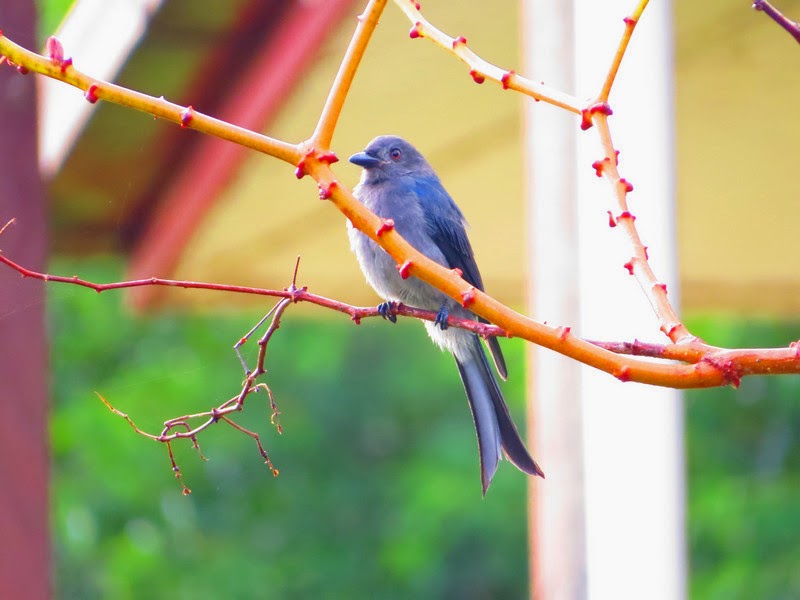
Ashy Drongo


Black and Yellow Broadbill


Cikgu Sang with his pencil Drawing masterpiece.


Cikgu Sang drawing of Clouded lepord from Bak kelalan

Yellow vented Bulbul
Ashy Drongo


White Brested Wood Swallow


Oriental Magpie Robin


Himilayan Cockoo


Barn Swallow


Violet Flowers


Daisy


A shaking bridge


Pied Fantail


A dead cobra


House sparrow


Gold whiskered barbet


Birdwatching at Dulit range


 Unidentified cuckoo


A very spacious Homestay


White brested waterhen


Spoted Dove


Yellow bitten


Mushroom


Touch me not flower


Flower


Bunga pasir


Buduk Nur Church


Violet buter cup


A young Berawan lady


 MNS Miri Branch birdwatchers 2014


We will be back to Bak Kelalan